
A commercial lease can remain enforceable while still failing the tenant when enforcement crosses borders. That risk matters in 2026, because Israeli commercial leasing operates through overlapping contract, property, and local legal rules, rather than one federal-style statute. The United States has no single federal statute governing commercial leasing, while Israel also lacks a dedicated franchise statute, illustrating why international businesses must map each obligation to the governing jurisdiction. Commercial leasing law overview
A foreign corporate tenant should therefore treat the lease as a multi-year liability system, not a rent form. The right commercial lease agreement attorney tests every payment trigger, remedy, guarantee, repair duty, and enforcement route before the tenant signs.
The Hidden Cost of Reading a Commercial Lease Backwards
The safest way to review a commercial lease is to start with the signature page and work backwards. That approach forces the reviewer to identify every document incorporated by reference, every schedule, and every remedy before accepting the headline rent.
Landlords often place the largest operational risks outside the rent clause. Repair duties, indemnities, restoration requirements, insurance obligations, and default remedies can determine the tenant’s final exposure. A foreign tenant that focuses only on term and rent may miss the provisions that control exit costs.
Commercial leasing became a distinct legal specialization as leasing activity expanded in the late twentieth century. As landlords increasingly retained attorneys to draft leases, corporate legal departments developed into corporate and real-estate departments, and lawyers increasingly specialized in commercial leasing. The same legal-history review notes that greater attorney involvement also lengthened typical commercial office leases. Allen Matkins’ history of commercial leasing

Read remedies before commercial promises
A lease review should begin with the clauses that operate after the relationship fails. The tenant should first locate:
- Default provisions: Identify notice requirements, cure periods, cross-defaults, and landlord remedies.
- Restoration duties: Check whether the tenant must remove improvements, restore systems, or return the premises to an earlier condition.
- Guarantees: Trace liability beyond rent, including enforcement costs and improvement funding.
- Insurance and indemnity: Compare contractual exposure with actual policy limits and exclusions.
A Schedule of Condition can materially improve the tenant’s position. A narrative and photographic record establishes the premises’ starting condition and can limit the tenant’s repair obligation to that documented baseline. The Holland & Knight analysis of repair clauses and Schedules of Condition explains why the schedule also serves as evidence in later dilapidations disputes.
Practical rule: Never approve a repair clause without reviewing the condition evidence, casualty language, and surrender standard together.
Foreign tenants can also consult the tenant representation blog for market-oriented leasing context. That resource can help a business understand representation issues, but it cannot replace jurisdiction-specific legal analysis.
A commercial lease agreement attorney doesn’t merely mark up words. The attorney audits how each clause creates, transfers, limits, or accelerates liability.
Core Clause Families That Decide Your Exposure
Six clause families usually control the commercial lease’s economic and operational balance. Each family can appear reasonable alone, yet the combined effect may produce obligations the tenant never priced into its business plan.
The rent stack
Base rent forms only one layer. The tenant should also examine operating expenses, common-area charges, taxes, insurance pass-throughs, indexation, gross-ups, utilities, management fees, and audit rights.
A gross-up clause may let the landlord calculate expenses as though the building operated at a higher occupancy level. Without exclusions and verification rights, the tenant may pay for costs unrelated to its actual use.
Exit and transfer rights
A break clause matters only if the tenant can satisfy its conditions. Notice timing, payment status, vacant possession, compliance certificates, and removal duties can make an apparently useful exit right difficult to exercise.
Assignment and subletting provisions create a separate liquidity risk. A landlord consent standard based on “absolute discretion” can restrict a sale, restructuring, or relocation. A better provision requires consent that the landlord cannot unreasonably withhold, delay, or condition.
Change of control triggers
A foreign group may reorganize without changing the occupying entity. Yet a lease can treat an internal change of control as an assignment or default. The tenant should define permitted reorganizations and distinguish a genuine transfer of operational risk from an ordinary corporate transaction.
Maintenance and capital expenditure
The repair clause should allocate structural repairs, systems, ordinary maintenance, replacement, and post-casualty restoration separately. A tenant shouldn’t accept responsibility for capital items merely because it uses the relevant system.
Clear allocation matters because unclear repair obligations can produce damages claims or payment-in-lieu remedies. The Schedule of Condition should accompany the clause, rather than sit as an afterthought.
Indemnity and insurance
An indemnity may cover operational losses, third-party claims, property damage, and regulatory costs. Insurance may not cover every contractual indemnity, especially where exclusions, deductibles, territorial limits, or aggregate caps apply.
Common net-lease structures may require replacement-cost property insurance for leasehold improvements, business-interruption coverage, and liability insurance. The lease guaranty can also preserve recovery for amortized improvement allowances, brokerage commissions, enforcement costs, and collection expenses. Guarantees in commercial leases
Default and cure
A default clause can convert a minor payment delay into a broad remedy package. Cross-default language may connect the lease to other agreements, facilities, or group obligations.
| Clause Family | Primary Risk Lever | Typical Tenant Exposure |
|---|---|---|
| Rent stack | Cost escalation | Unpredictable operating expenses and taxes |
| Exit rights | Mobility and timing | Trapped premises and continuing rent |
| Transfer controls | Corporate flexibility | Blocked sale, restructuring, or sublease |
| Maintenance | Repair allocation | Capital replacement and restoration costs |
| Indemnity and insurance | Risk transfer | Uninsured claims and guarantee liability |
| Default remedies | Enforcement leverage | Acceleration, termination, and collection costs |
The diagnostic question remains simple: Which party controls the trigger, and which party pays after it activates?
How to Select and Engage the Right Attorney
A general corporate lawyer may understand the tenant’s business while missing the mechanics of commercial leasing. A commercial lease agreement attorney should demonstrate repeated experience with lease drafting, negotiation, enforcement, and the tenant’s specific asset class.
Start with the property. Office, industrial, retail, logistics, life-science, and data-center premises create different operational risks. The attorney should understand the systems, permits, service arrangements, access requirements, and reinstatement issues that shape that asset.

Use a disciplined selection process
A foreign tenant should ask candidates these questions:
- How does the attorney handle landlord consent disputes? The answer should address evidence, deadlines, negotiation, and urgent relief.
- What does the markup process include? The tenant should learn whether the review covers schedules, side letters, building rules, and service contracts.
- How does the attorney assess a foreign guarantor? The analysis should cover jurisdiction, service, assets, recognition, and enforcement.
- Which asset classes does the attorney handle regularly? Relevant experience often matters more than broad real-estate branding.
- Who coordinates foreign counsel? Cross-border matters need one person to manage Israeli and offshore advice.
Fee structure should match the assignment. A flat-fee review may suit a short-form lease with limited negotiation. Hourly support can work when the tenant expects several commercial variables to change. A capped-fee full engagement may fit a headquarters lease involving extensive schedules, construction obligations, and multiple negotiation rounds.
The engagement letter deserves the same scrutiny as the lease. It should define deliverables, exclusions, assumptions, responsible lawyers, communication rules, and billing mechanics. Vague scope language can create a second dispute before the first one ends.
A low initial fee doesn’t protect a tenant if the engagement excludes the schedules that contain the real obligations.
RNC Group handles commercial leasing, property-management agreements, usage licences, service contracts, and related compliance issues as part of its international commercial practice. The firm’s role should remain clearly defined, especially where local counsel, tax advisers, insurers, or technical consultants must contribute.
Negotiation Tactics That Protect Long-Term Cash Flow
The strongest lease negotiation prioritizes recurring exposure over cosmetic drafting wins. A tenant may spend time debating a minor notice provision while accepting an uncapped operating-expense mechanism that affects every year of the term.
Compare the economic alternatives
| Clause Category | Landlord-Standard Term | Tenant-Protective Alternative | 10-Year Cash Impact |
|---|---|---|---|
| Operating expenses | Broad pass-through with limited exclusions | Defined costs, exclusions, audit rights, and a negotiated cap | The tenant limits compounding cost uncertainty |
| Default | Immediate remedies after limited notice | Notice, meaningful cure periods, and proportional remedies | The tenant preserves operating continuity |
| Assignment | Consent subject to broad discretion | Consent not unreasonably withheld, delayed, or conditioned | The tenant protects sale and restructuring value |
| Restoration | Return premises to a broad original standard | Restore only agreed alterations and documented condition | The tenant reduces surrender ambiguity |
| Relocation | Landlord may relocate the tenant broadly | Limited relocation rights with notice and cost protection | The tenant protects business continuity |
| Co-tenancy | No remedy for anchor failure | Defined remedies after material trading disruption | The tenant addresses location-dependent revenue risk |
A cap on controllable operating expenses can protect planning, but the drafting must define what the cap covers. Structural work, legal compliance, insurance changes, and emergency repairs may sit outside the cap unless the tenant negotiates otherwise.
The tenant should also separate controllable and uncontrollable costs. That structure may offer the landlord flexibility for genuine external charges while preventing management decisions from becoming automatic tenant liabilities.
Negotiate remedies, not just promises
Acceleration provisions deserve careful resistance. A landlord may seek the remaining rent after default, while the tenant may seek mitigation, present-value adjustment, reletting credits, and a duty to avoid duplication.
Assignment restrictions create a hidden liquidity trap. During a downturn, a tenant that cannot sublet unused space may continue paying for premises that no longer support its operations. Consent rights should include objective financial and operational criteria.
A practical financial review should sit beside legal markup. Businesses already treat major property commitments as financing decisions, much as they evaluate finding the right SBA loan broker when arranging business funding. The comparison isn’t legal advice, but it reinforces the same discipline. Management should price downside scenarios before approving the commitment.
The best concession usually prevents a recurring liability, not a one-time inconvenience.
Demolition and relocation provisions require operational safeguards. The tenant should seek advance notice, comparable replacement space, landlord-paid moving costs, business-interruption protection, and termination rights when relocation destroys the premises’ commercial value.
Co-tenancy provisions also need precision. If an anchor tenant leaves, the tenant should know whether it receives rent relief, a conversion right, or a termination option. Vague language rarely protects a business that depends on foot traffic or a functioning commercial ecosystem.
Cross-Border Enforcement and Israeli Market Realities
A parent guarantee from abroad can look strong on paper and remain difficult to collect. The landlord must still serve the guarantor, establish jurisdiction, obtain relief, and enforce against assets located outside the forum.
That gap changes negotiation strategy. A tenant should identify the guarantor’s assets, governing law, submission to jurisdiction, service mechanism, and recognition pathway before offering the guarantee. The question isn’t whether the parent will sign. The question is whether the promise will produce payment after a dispute.
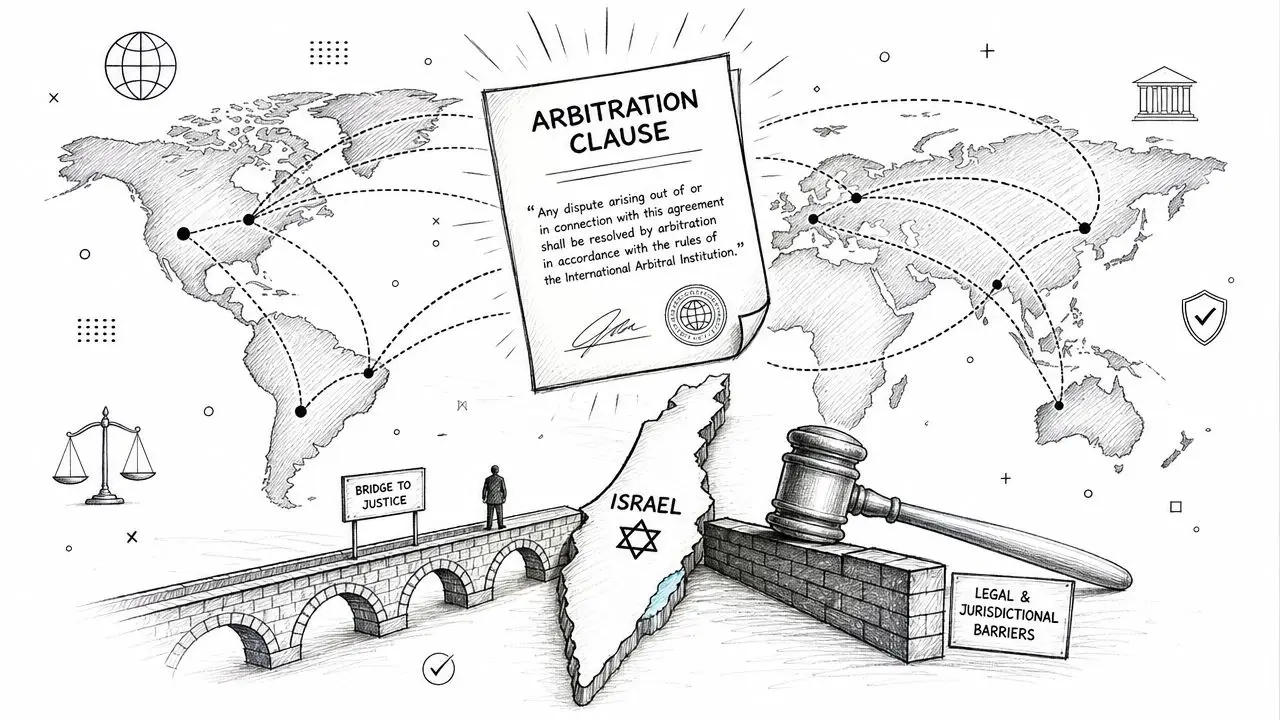
Model the Israeli enforcement route
Israeli commercial leasing also creates local enforcement considerations. Choice-of-law and arbitration clauses can allocate dispute forums, but they cannot automatically displace mandatory statutory protections or prevent urgent property-related relief.
A guarantee should distinguish rent from other liabilities. The tenant may negotiate a limited guarantee, a reduction schedule, or a release after specified financial and operational milestones. However, market drafting may preserve claims for amortized improvement funding, brokerage commissions, enforcement expenses, and collection costs.
Bank guarantees also require careful design. The tenant should examine draw conditions, expiry, renewal mechanics, reduction rights, notice, and the relationship between the guarantee and the parent undertaking. A landlord may prefer immediate access to security, while the tenant needs safeguards against wrongful or excessive drawing.
Cross-border clients should address enforcement risk directly in the lease negotiation. Recent commentary identifies service, jurisdiction, Hague Convention procedures, and judgment enforcement as factors that can add substantial time and cost when a guarantor sits outside the forum. Cross-border lease enforcement risks
Treat security as a portfolio issue
A landlord may request multiple security layers, including a deposit, bank guarantee, and parent guarantee. The tenant should seek an integrated cap so the landlord cannot recover the same exposure through several instruments.
The lease should also state how recoveries interact. If the landlord draws a guarantee and later obtains payment from the parent, the documents should prevent double recovery. A commercial lease agreement attorney should test the full enforcement sequence, not just the wording of each security document.
Future-Proofing Against Regulatory and ESG Reform
A lease should function as a forward-looking compliance roadmap, not a static allocation of costs. The tenant needs provisions that remain workable as later renewals, building upgrades, reporting duties, and operating requirements change. Each obligation should identify who controls the project, who receives the benefit, and how the tenant can verify any charge.
Reform discussions identify rigid lease structures, disputes over sustainability upgrades, and repair obligations as barriers to property improvement. In England and Wales, commercial leasing practice developed through reforms and later standardization, including the Code for Leasing Business Premises in England and Wales 2007. Earlier milestones included the 1889 Select Committee on Town Holdings, while cases such as Street v Mountford (1985) and Ashburn Anstalt v Arnold (1989) refined lease characterization. Commercial lease reform analysis
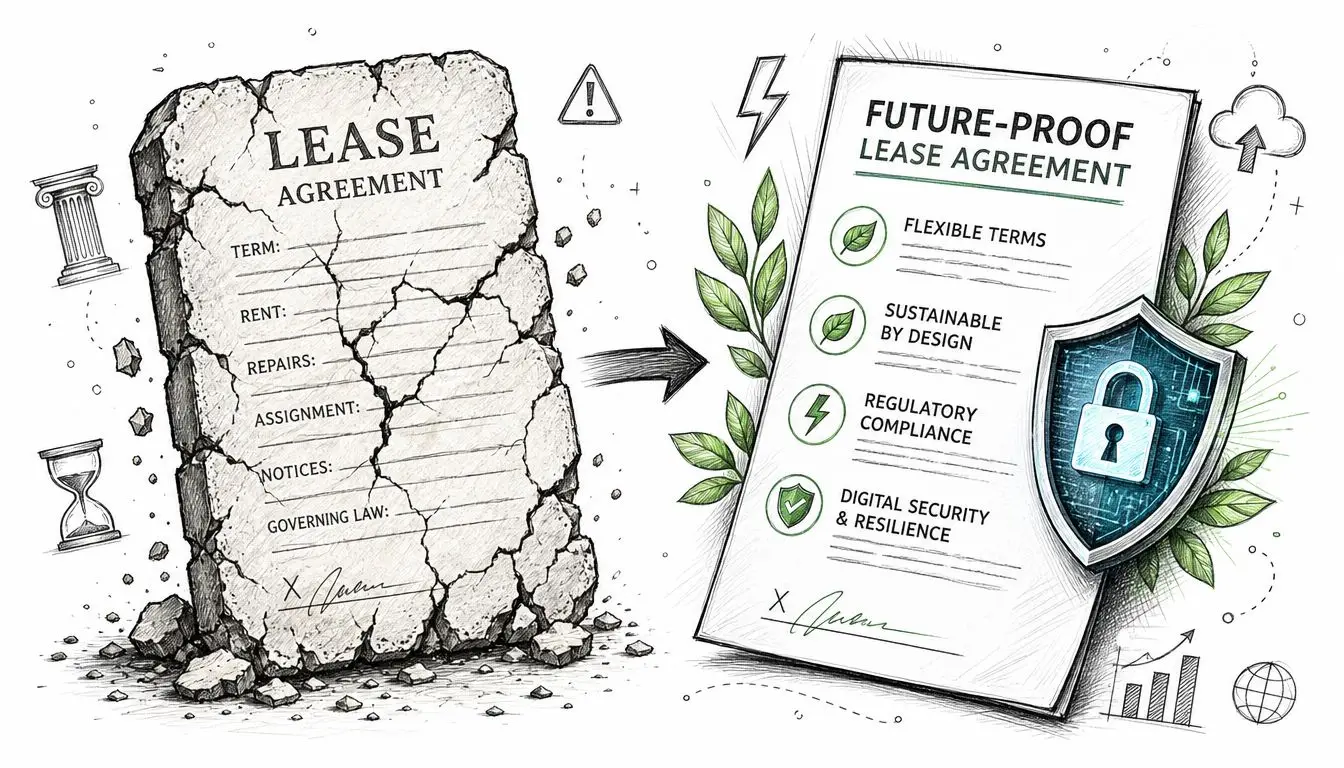
Allocate improvement costs with precision
For HVAC upgrades, solar installations, energy audits, building-management systems, and other capital works, the lease should answer five questions:
- Approval: Which party selects the project, contractor, and technical standard?
- Payment: Does the tenant pay capital costs, operating costs, or only documented savings?
- Benefit: Who receives rebates, efficiency savings, certificates, or data rights?
- Verification: Can the tenant inspect invoices, calculations, and performance results?
- End of term: Who owns the equipment, and who removes it?
Carbon reporting clauses require the same care. A landlord should not transfer broad Scope 3 reporting duties to the occupier without defining data access, methodology, control, and proportionality.
Regulatory-change clauses can become uncapped pass-through provisions. Recovery should be limited to legally required, reasonable, documented costs proportionate to the premises. Improvements that primarily increase the landlord’s asset value should remain outside the tenant’s charge.
Technology provisions also belong in the lease. Address telecom risers, data access, smart-building systems, cybersecurity responsibilities, EV infrastructure, and installation rights. These terms determine who controls operational data, who bears upgrade costs, and whether a future compliance change can disrupt business continuity.
Strategic Next Steps and Risk Mitigation
The engagement should begin with an exposure audit, not a generic lease summary. Management should collect the executed lease, amendments, schedules, guarantees, insurance certificates, service-charge statements, condition records, and correspondence about defaults or works.
Prioritize the review
- Map the liability engine: Classify rent, operating expenses, capital works, repairs, indemnities, guarantees, and remedies.
- Test enforceability: Identify governing law, forum, service provisions, guarantor location, and recoverable assets.
- Check operational reality: Compare the written obligations with the premises’ actual condition, systems, use, and alteration history.
- Prepare renewal strategy: Review notice dates, break conditions, assignment rights, and future compliance costs before negotiations begin.
- Create an escalation plan: Separate issues suitable for commercial negotiation from issues requiring urgent legal relief.
This process gives the board a decision document rather than a marked-up contract. It also helps management distinguish a tolerable commercial compromise from an uninsured or uncollectible liability.
Foreign businesses operating in Israel should involve counsel before signing, renewing, restructuring, or issuing a parent guarantee. A structured lease audit can expose cross-border collection problems while the tenant still has negotiating power.
This article provides general strategic information only. It doesn’t constitute legal advice, doesn’t address any specific transaction, and doesn’t create an attorney-client relationship. Readers should obtain advice from qualified counsel before relying on any point discussed here.
RNC Group offers commercial lease drafting, property-management support, risk analysis, and cross-border commercial dispute strategy for businesses operating in Israel and international markets. Companies should avoid costly lease mistakes by requesting a structured review through RNC Group, before signature, renewal, restructuring, or enforcement becomes urgent.